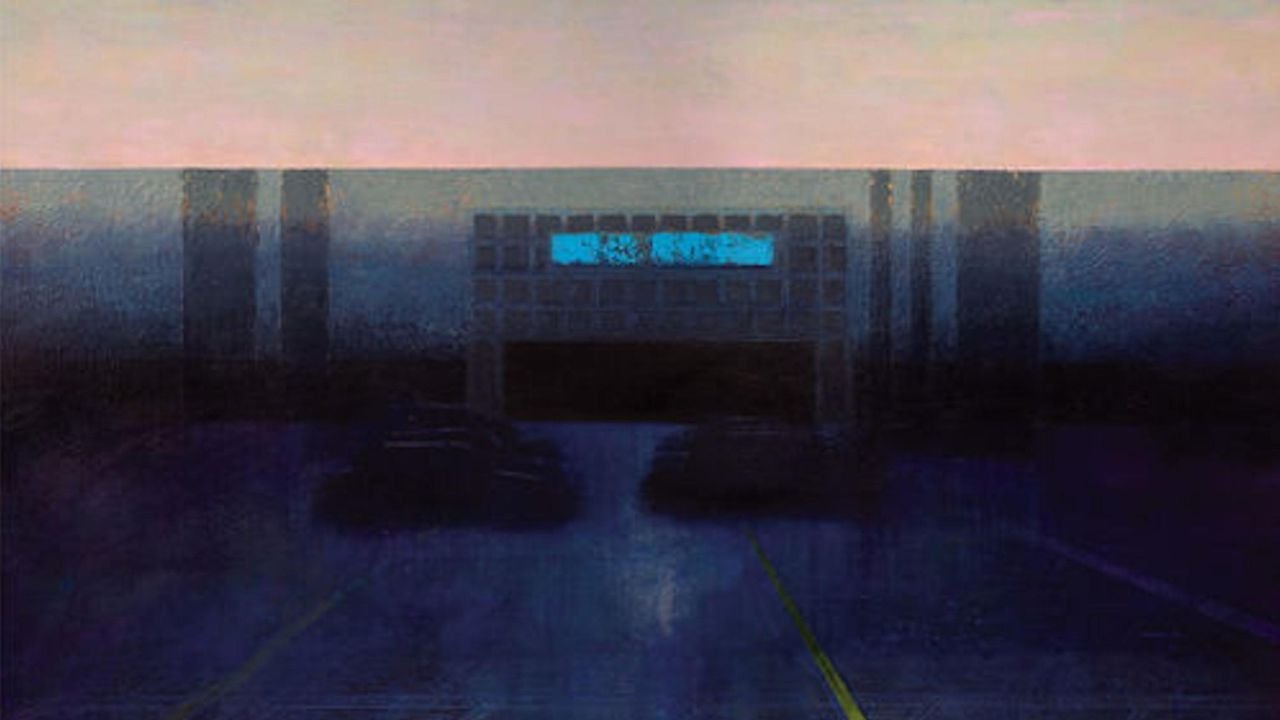
Sometimes it’s the most unlikely thing that makes you want to hear a record. With Suburban Tours, I read an interview in The Wire magazine with Joe Knight, the one-man-band that is Rangers, in which he described the songs as “dull, numb, and vacant.” An odd way for a musician to characterize his own work, you might think. Odder still, it’s this remark that snagged my attention, got me thinking: “I’ve got to hear this album.”
To understand why a creator might say such a thing and why it might pique a consumer’s interest, we need to re-immerse ourselves in the musical climate of the late 2000s and early 2010s. The reigning sensibility on the American underground was something variously dubbed chillwave, hypnagogic pop, and glo-fi (my favorite of the three, and easily the most evocative of how the genre actually sounded, this term sadly never really caught on). Artists like James Ferraro, Oneohtrix Point Never, and Emeralds were exploring hitherto maligned genres like New Age and yacht rock. Meanwhile, over in the UK, hauntologists like the Ghost Box label were sampling, or simulating, the inconspicuous sounds of library music and radiophonics. People were suddenly paying attention to music you were never meant to pay attention to, giving serious consideration to sounds until now considered beneath serious consideration. Square was hip, soporific was exciting, background came to the foreground.
What happened then is what the philosophers call transvaluation: Conventional ideas about what is good, valid, pleasing to the ear were upended. Suddenly, you could no longer think of words like “bland” or “slick” as inherently negative properties. It wasn’t so much that hip folk were examining unexamined assumptions as they were simply turned on by the idea of thinking counterintuitively—by the sheer dare of listening to the original uncool music, or the contemporary cool music influenced by it.
This new appreciation for soft rock and sedative New Age made sense as a paradigm shift within the rock dialectic. While initially an invigorating break from late ’90s alt-rock blandness, what could be more conventional, played-out, and old hat by 2008 than the standard, White Stripesy palette of “raw,” “dirty,” “warm”? Not that those received associations have ever gone away entirely: They’ve just wound their way through to the beyond-exhaustion point of what I call “Studio Dirty,” and young bands modeled on this obsolete value system still trundle forth to play the lower rungs of festival line-ups.
Having said all that, when I finally clapped ears on Suburban Tours in spring 2010, it didn’t strike me as dull or numb or vacant. It sounded exciting, tingling with feeling, ecstatic. And in a funny way, the record does involve qualities traditionally valorized in underground rock. The sound is rough around the edges; distortion is involved. Suburban Tours is audibly a DIY record, home-made on dirt-cheap equipment, and in no way resembles something cooked up (coked up?) by the Doobie Brothers at Sunset Sound Recorders.