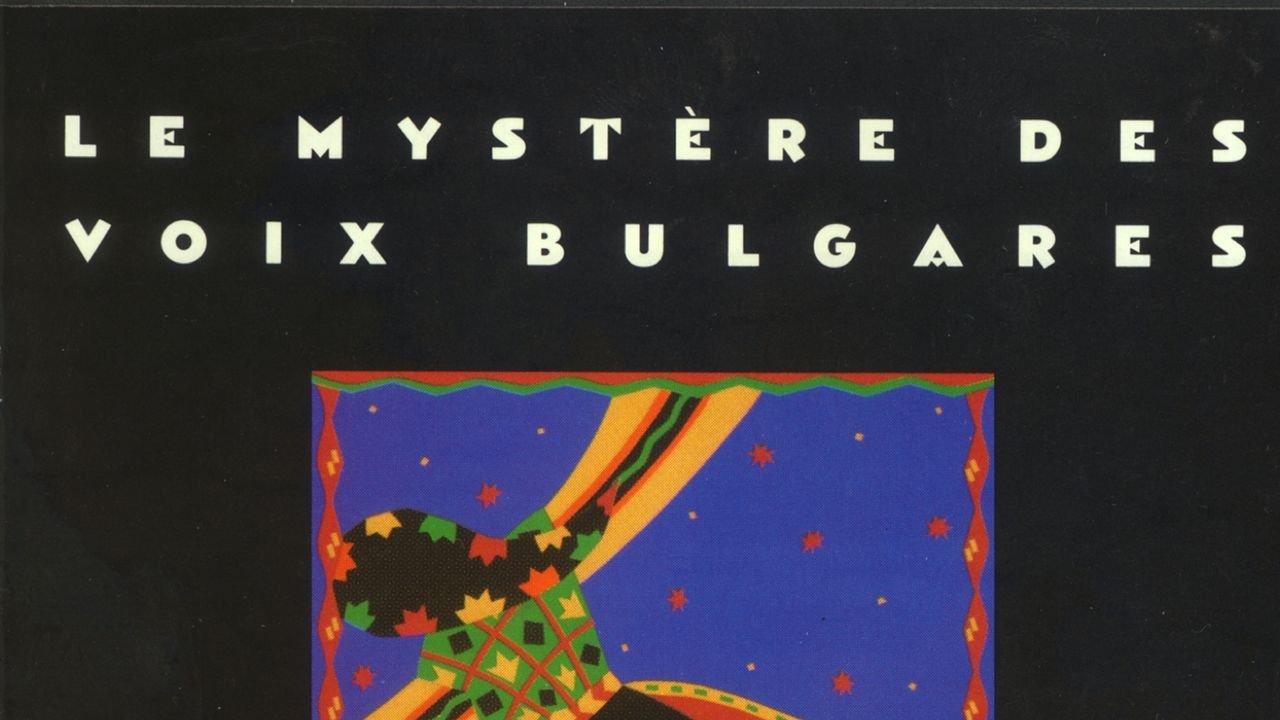
Across Le Mystère, the ensemble layers tight, syncopated harmonies that jolt the soloist forward or fan out around her prismatically in a velvety drone. The sound is chastening, both exacting and unstoppable. At times, it is scarcely believable that these are human voices. On “Schopska Pesen,” the ensemble’s diaphonic chant sounds exactly like an instrument made of wood and horsehair and expressly designed to sound reedy.
Naturally, the choir won over many famous fans, including Linda Ronstadt. “I thought about going to Bulgaria to find them, but I didn’t know whether I’d have to go out to a wheat field and see people standing there with sickles in their hands or whether they would be playing at a gig in a club,” she told the LA Times ahead of the choir’s sold-out stop in L.A., as part of their first sold-out U.S. tour in 1988.
Some artists did track them down. In 1989, Kate Bush featured the Trio Bulgarka—three singers from Le Mystère who had branched off and rebranded—on her sixth album, The Sensual World. (On her previous album, Hounds of Love, she spliced a choral section from the Georgian folk song “Tsintskaro” into “Hello Earth.”) She first heard the choir through her brother Paddy, who she says was “interested in ethnic music,” and soon flew to Bulgaria to meet them herself. Their voices became a proxy for Bush’s return to femininity. After several albums working only with male collaborators and writing hetero-optimistic music driven by male muses, The Sensual World was her attempt to locate her own femininity, something the trio helped ferment.
Into the 1990s, Western markets reframed the ensemble’s songs as feminist acts of freedom, turning their voices toward their own cultural fantasies—like Xena Warrior Princess. The ensemble’s “Kaval Sviri” played as Xena valiantly went into battle in the Hercules episode “Unchained Heart.” The show’s producers, having heard the Mystère recordings, believed that the striking sounds of the Bulgarian vocals would perfectly symbolize their formidable heroine.
Decades later, in 2017, the same song appeared in Lady Gaga’s documentary Five Foot Two. After Gaga documented her struggle with fibromyalgia, “Kaval sviri” played as Gaga was lifted into the air during her Super Bowl performance, a perilous stunt meant to signal her courage and valor. Another formidable heroine.
The voices of the Bulgarian choir have since found themselves in songs by Drake, Bring Me the Horizon, Tiësto and Jason Derulo, becoming further disembodied, as they were made to mimic the stutter of EDM vocals. None of this benefited the ensemble, of course. Since the Western labels and collectors like Cellier owned all recordings of the choir, the royalties transferred back only to them. Today, choir members recruited during the 1950s and 1960s are now retiring on insufficient pensions.
Watts-Russell wasn’t—and still isn’t to this day—much concerned with who these women were, what they were singing about, or where they are now. He wanted them to remain originless. “Frankly, the repeated listening didn’t pique my curiosity up any more,” he told The Quietus in 2011. “I loved the anonymity of it. I loved not really knowing. I’m sure Marcel might have told me, or I might have asked him, but I have forgotten the details, because as I said, I didn’t care.”
With that sandblasted indifference, the ensemble risks becoming another buried monument, half-emerging from the soil. Although they sing as though the Earth had found its tongue and breath, the keepers of their music are still intent upon attributing this power to mystery rather than the women themselves. Their monolith is as grand as Ozymandias’. People will study the ruin; the makers will remain unregarded. To whom will this mystery belong?