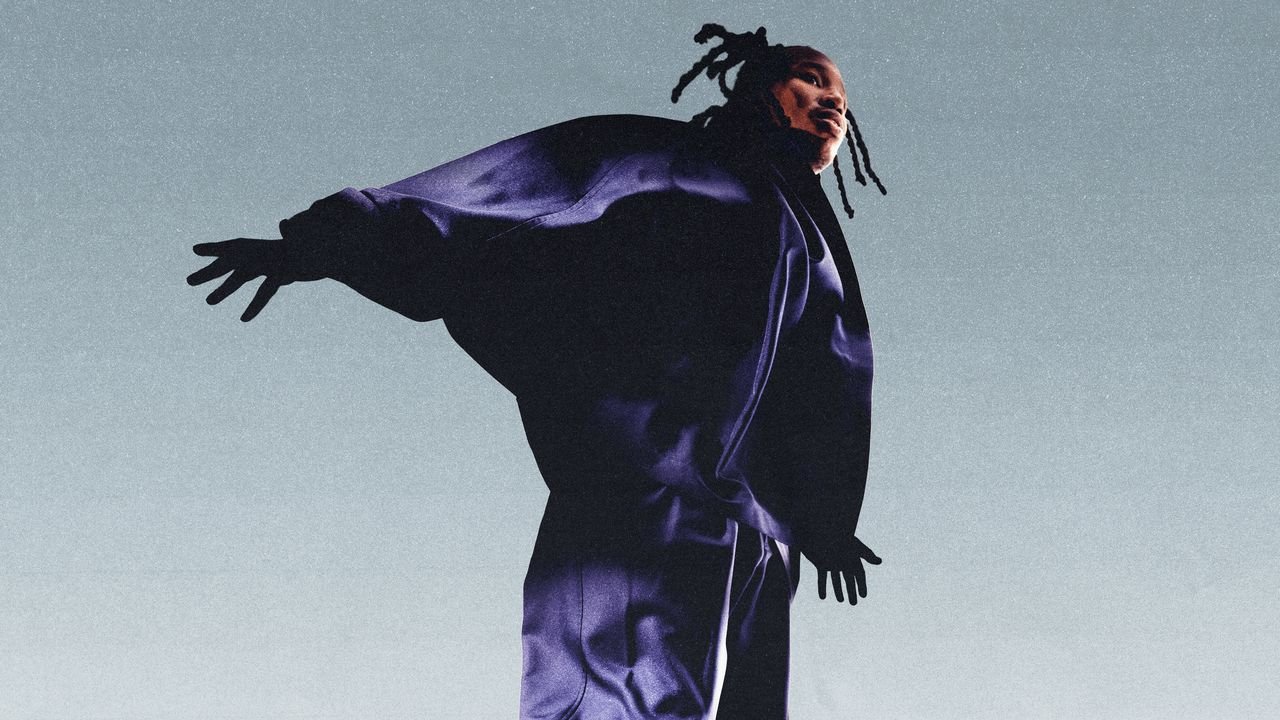
Mavi buried an objective inside Let the Sun Talk: “Can’t wait until my raps is more than stashes for my secrets.” The line poked at his Earl-indebted tendency to obfuscate in his rhymes and underscored the quest for lucidity that powers his racing, headlong flows. Even when the Charlotte rapper speaks in code, he wants to be felt. He’s become less cryptic since that 2019 record, trading lo-fi grime and heady philosophy for vivid dispatches about fame, addiction, and depression over lucent beats. Secrets still abounded on 2022’s sun-bleached Laughing so Hard, it Hurts and 2024’s desolate Shadowbox, but Mavi began to bend them as often as he stashed them, incorporating myth, fiction, and folklore into his diaristic writing. Mavi’s pain rap is as dreamy and playful as it is anguished.
He approaches legibility from a new angle on The Pilot. You can hear his voice more clearly as he swaggers across these uptempo, pristine songs. His flows stream rather than coil; his words are steadier, more clarion. The melancholic soot of his past music has been pressure-washed away, revealing a confident stylist. The project, a prelude to his upcoming album First in Flight that he says will explore Afrofuturism and invention, isn’t as emotive as his past music, but it pursues the same goal of relentless truth-telling. For now, Mavi’s truth is simply that being rich and sober feels fucking great.
Well, sorta. The flexes and taunts that populate The Pilot tend to be loaded. From the opening bar—“I’m the best-dressed nigga on my therapist couch”—Mavi’s tongue is firmly in cheek. He spends very little time on The Pilot explicitly confessing, largely narrating a plush life of designer fragrances and fits, foreign travel, and trips to the bank. But the toasts constantly get qualified and complicated. “I’m in the sky all alone on a tightrope dancing,” he raps on “Heavy Hand,” briskly turning an image of freedom into one of precarity. “Picking out the lock like beady beads, I’m three degrees/From priesthood or the precinct,” he raps on “Mender,” again placing himself inches away from peril.
Lines that begin as toasts often spiral into laments then lurch into threats or prayers, a flux supercharged by Mavi’s shifting flows. His frequent allegro cadence accents how deftly he changes direction within verses. “Silent Film,” set to mellow chords and a shuffling breakbeat, is casually breathless: “I roll the dough and cook it/Was juggin’ cause in a world so cold, you just throw on a hoodie/I see the limit and push it, sneaking over the edge/Made a million off of my grief, none of my people rose from the dead,” Mavi raps, subtly pausing—and stretching and compressing words—to keep the meter. While the mood of the jet-setting tape is largely celebratory and easygoing, turbulence is constant. Mavi just makes it bounce.
The production is giddy. Flute trills (“Denise Murell”), soul samples (“Landgrab,” “Mender”), and horns (“Triple Nickel”) get looped into gnarled shapes then tousled with airy keys and drums that patter and snap. “G-ANNIS FREESTYLE,” produced by Reuben Vincent, is the most distinct, with thick bass kicks and lolled effects that sound like Peanuts adults speaking with mouthfuls of tahini. But the elegant multipart horn and string loop of “Typewriter” is the most thrilling. Producer lilchick makes use of every little instrument and texture in the sample, creating a bounty of pockets for MAVI and Kenny Mason to run through with their slick double-times. “I was bred in the violence of poverty/I would die ‘fore I feel it again,” Mason raps, distilling the tape’s hardscrabble ethos.